

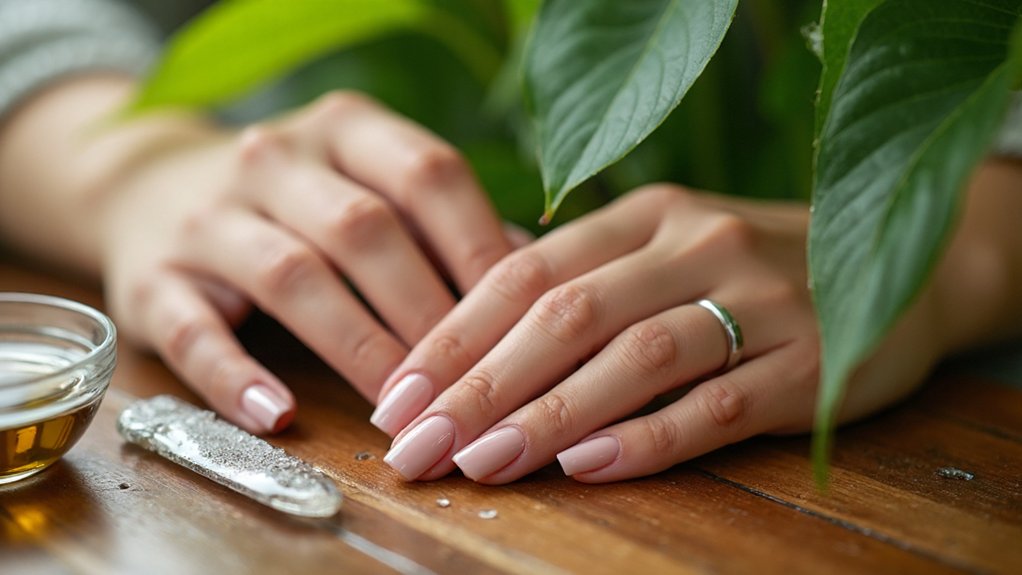
Your nails say a lot about your overall health. Strong, healthy nails can boost your confidence and reflect your well-being. But what happens when they become weak or brittle? Understanding the signs of healthy nails and how to care for them is crucial. Let’s explore the common problems and what you can do to guarantee your nails remain resilient and beautiful. You’ll be surprised at how simple changes can make a significant difference.
Nail Health Guide: What Are the Signs of Healthy Nails?
When you think about healthy nails, a few key signs can help you gauge their condition.
First, look for a smooth surface without ridges or spots. Healthy nails should also have a consistent color—usually a pinkish hue with a white tip.
They shouldn’t be brittle or peel easily; instead, they should feel strong and flexible. Additionally, nails should grow at a steady rate, indicating proper nutrition and care.
Finally, check for a healthy shine, which suggests hydration and overall well-being. By recognizing these signs, you can maintain your nail health and address any concerns promptly.
How to Identify Common Nail Problems?
Healthy nails can sometimes show signs of problems that may indicate underlying issues. By observing your nails, you can identify common problems early and take action.
Here are three signs to watch for:
- Discoloration: Yellow, white, or dark spots may signal infections or other health concerns.
- Brittleness: Nails that break easily or feel weak could indicate dehydration or nutrient deficiencies.
- Ridges or grooves: Uneven surfaces can hint at health issues or trauma to the nail.
If you notice any of these signs, consider consulting a healthcare professional for further evaluation and guidance.
Why is Nutrition Important for Nail Strength?
Nutrition plays an essential role in maintaining strong, resilient nails. A balanced diet rich in vitamins and minerals provides the building blocks your nails need to grow healthy.
Biotin, found in eggs and nuts, promotes nail strength, while protein from lean meats and legumes helps form keratin, the primary component of nails.
Iron, present in leafy greens, prevents brittleness and breakage. Omega-3 fatty acids, found in fish and flaxseeds, keep your nails moisturized.
Hydration is also vital; drinking enough water supports overall nail health.
What Are the Best Practices for Nail Care at Home?
Strong nails start with proper care at home. By following a few best practices, you can keep your nails healthy and strong.
Here are three key tips to incorporate into your routine:
- Moisturize Regularly: Use a good hand cream and cuticle oil to keep your nails hydrated and prevent brittleness.
- Limit Exposure to Chemicals: Wear gloves while cleaning or using harsh products to protect your nails from damage.
- Avoid Over-Manicuring: Give your nails a break from polish and artificial nails to allow them to breathe and recover naturally.
Implementing these practices will help guarantee your nails stay strong and resilient.
How to Choose the Right Products for Nail Health?
When it comes to choosing the right products for nail health, how do you know what truly works?
Start by looking for nail polishes and treatments that are free from harmful chemicals like formaldehyde and toluene.
Opt for nourishing ingredients such as keratin, biotin, and vitamin E, which strengthen and moisturize your nails.
Don’t forget to check for reputable brands that prioritize quality.
If you’re unsure, read reviews or consult a professional.
Always patch-test new products to avoid allergic reactions.
Investing in quality products will help you maintain strong, healthy nails that look great.
What Lifestyle Changes Can Improve Nail Strength?
If you want to boost your nail strength, consider making some simple lifestyle changes.
Start by incorporating these practices into your routine:
- Stay Hydrated: Drink plenty of water daily to keep your nails and cuticles moisturized.
- Eat a Balanced Diet: Include foods rich in biotin, zinc, and protein, like nuts, eggs, and leafy greens to promote nail growth.
- Limit Exposure to Chemicals: Use gloves while cleaning or doing dishes to protect your nails from harsh chemicals.
How to Manage Nail Damage and Breakage?
Even as you take steps to strengthen your nails, managing existing damage and breakage is essential for maintaining their health.
Start by trimming any jagged edges to prevent further splitting. Use a nourishing cuticle oil daily to keep your nails hydrated.
Consider wearing gloves while doing chores to protect your hands from harsh chemicals and moisture loss. When applying nail polish, opt for a strengthening formula and avoid harsh removers.
Finally, give your nails a break from polish occasionally to allow them to breathe and recover.
With these simple steps, you can effectively manage and minimize nail damage and breakage.
Are There Any Myths About Nail Health to Consider?
Managing nail damage and breakage is important, but it’s equally essential to separate fact from fiction when it comes to nail health.
Here are some common myths you should be aware of:
- Nail polish causes nails to become weak: In reality, using quality polish can protect your nails and keep them stronger.
- You should breathe your nails by going polish-free: Nails don’t need to breathe; they’re made of keratin, which doesn’t require air.
- Bitten nails will always grow back stronger: Unfortunately, biting can lead to permanent damage and irregular growth.
Stay informed to keep your nails healthy!