

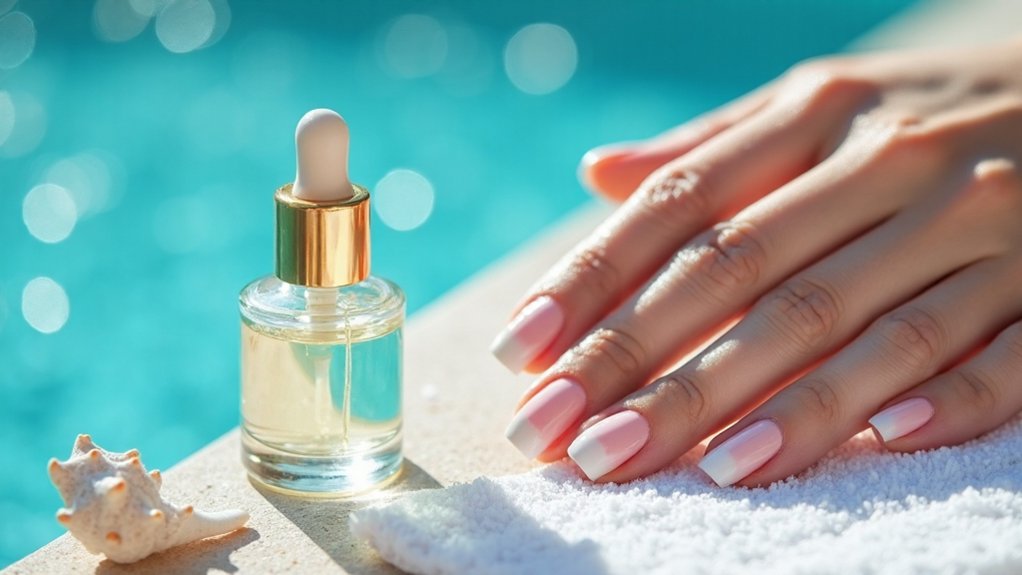
As a swimmer, you know the toll chlorine can take on your nails. It’s vital to adopt effective care strategies to keep them healthy. From rinsing your hands post-swim to using cuticle oil, small changes can make a significant difference. But what specific practices should you prioritize? Understanding the right approach can help you maintain strong, resilient nails while enjoying your time in the pool. Let’s explore the essential tips that can make a real impact.
What is Nail Care for Swimmers and Why is it Important?
When you plunge into the pool, you mightn’t think about your nails, but proper nail care is essential for swimmers.
Keeping your nails trimmed and clean helps prevent breakage and infections. Regular maintenance also enhances your grip on the pool’s edge, improving your performance.
By moisturizing your cuticles, you reduce the risk of hangnails and discomfort. Additionally, strong nails can withstand the wear and tear from water exposure.
Prioritizing nail care not only protects your hands but also lets you swim confidently. Remember, healthy nails contribute to your overall swimming experience, so don’t overlook them!
How Can Swimmers Protect Their Nails from Chlorine Damage?
Many swimmers mightn’t realize that chlorine can wreak havoc on their nails, leading to brittleness and discoloration.
To protect your nails from chlorine damage, try the following tips:
- Rinse Off: Always rinse your hands and nails with fresh water immediately after swimming.
- Use Nail Strengtheners: Apply a protective nail strengthener before hitting the pool.
- Wear Gloves: Consider wearing waterproof gloves during practice to shield your nails.
- Moisturize Regularly: Keep your nails and cuticles moisturized with a good quality oil or cream.
Implementing these strategies can help maintain your nails’ health and appearance.
What Nail Care Products are Best for Swimmers?
What nail care products should swimmers keep in their kits?
Start with a high-quality base coat to protect your nails from chlorine and prevent staining.
A strengthening nail treatment can help combat brittleness caused by regular exposure to water.
Don’t forget a nourishing cuticle oil to keep your cuticles hydrated and healthy.
For a pop of color, choose a long-lasting, water-resistant nail polish that can withstand your swimming routine.
Finally, a gentle nail file will help you maintain your nail shape without causing damage.
With these essentials, you can keep your nails looking great and feeling strong.
How to Maintain Healthy Nails While Swimming Regularly?
To maintain healthy nails while swimming regularly, you need to adopt a proactive approach that addresses the unique challenges posed by chlorine and constant exposure to water.
Here are four essential tips to help you keep your nails in top shape:
- Wear waterproof gloves during practice to shield your nails from chlorinated water.
- Limit your exposure to chlorine by rinsing off immediately after swimming.
- Trim and file your nails regularly to prevent breakage.
- Consider a nail-strengthening treatment to fortify your nails against damage.
Why is Moisturizing Crucial for Swimmers’ Nail Care?
Moisturizing is a key part of nail care for swimmers, especially since frequent exposure to chlorinated water can lead to dryness and brittleness.
When you swim regularly, your nails can become weak and susceptible to breakage. By applying a good moisturizer, you keep your nails hydrated, maintaining their strength and flexibility.
This not only prevents damage but also promotes healthier growth. Look for products containing nourishing ingredients like vitamin E or jojoba oil.
Make moisturizing a daily habit, especially after swimming, to protect your nails from the harsh effects of chlorine and guarantee they stay looking their best.
How to Identify and Treat Common Nail Problems for Swimmers?
Have you ever noticed your nails looking discolored or feeling brittle after a long swim?
Swimmers often face specific nail issues. Here’s how to identify and treat common problems:
- Discoloration: If your nails turn yellow, it might be from chlorine. Use a gentle nail buffer to lighten them.
- Brittleness: Dry nails can break easily. Apply a nourishing cuticle oil regularly.
- Fungal Infections: Look for thickening or discoloration. Consult a doctor for antifungal treatments.
- Hangnails: Trim them carefully to avoid painful tears. Keep your nails moisturized to prevent future hangnails.
Stay vigilant and care for your nails!
What Are the Best Practices for Nail Care Before and After Swimming?
While swimming offers great exercise and relaxation, it can also take a toll on your nails if you don’t follow proper care routines.
Before jumping in, consider applying a protective layer of nail polish or a clear base coat to shield your nails from chlorine.
After swimming, rinse your hands and feet thoroughly with fresh water to remove chlorine and other chemicals.
Moisturize your nails and cuticles with a nourishing oil or cream to combat dryness.
Regularly trim your nails to prevent breakage and keep them strong.
How Can Diet Contribute to Stronger Nails for Swimmers?
Taking care of your nails goes beyond just external treatments; your diet plays a significant role in their strength and resilience.
To guarantee your nails are strong and healthy, focus on incorporating these key nutrients:
- Biotin: Found in eggs and nuts, it promotes nail growth.
- Protein: Eating lean meats and legumes provides the building blocks for nails.
- Zinc: Sources like spinach and pumpkin seeds help prevent brittleness.
- Omega-3 Fatty Acids: Include fish and flaxseeds to keep nails moisturized.