

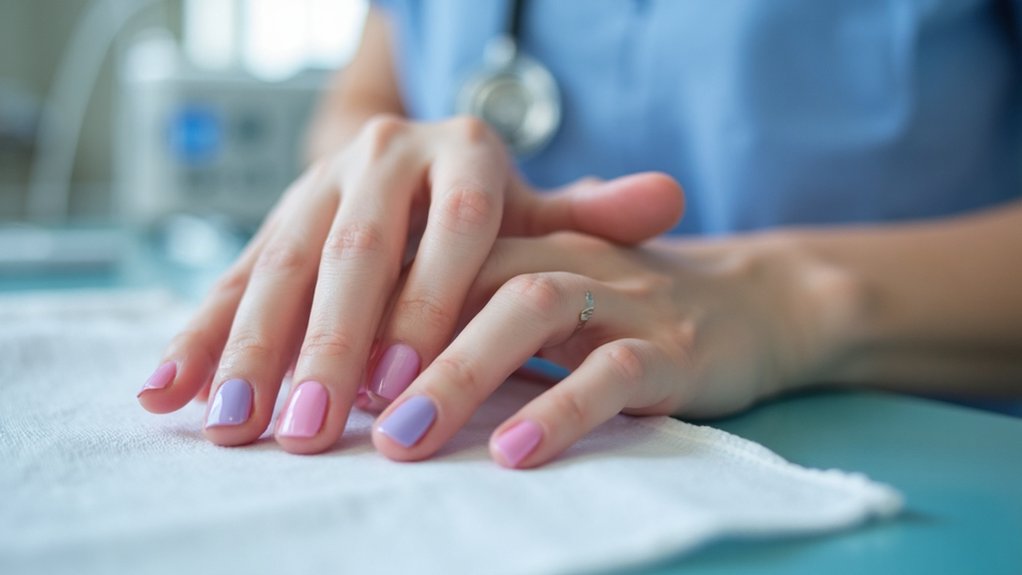
As a nurse, you know that nail care isn’t just about aesthetics; it’s essential for hygiene and professionalism. Keeping your nails well-groomed can prevent dirt buildup and protect against infections. But what specific practices can help you maintain healthy nails in such a demanding environment? From trimming techniques to choosing the right products, there are several strategies that can make a significant difference in your daily routine. Let’s explore these tips further.
What is the Importance of Nail Care for Nurses?
When you consider the demanding environment nurses work in, maintaining proper nail care becomes essential. Your hands are constantly in contact with patients, equipment, and various substances, making it vital to keep your nails clean and trimmed.
Neglected nails can harbor bacteria, leading to infections that can jeopardize patient safety. Additionally, well-groomed nails reflect professionalism and contribute to the overall impression you make on patients and colleagues.
How Can Nurses Maintain Healthy Nails?
Maintaining healthy nails is a straightforward yet essential aspect of your overall hygiene routine as a nurse.
To keep your nails in top shape, follow these simple tips:
- Keep your nails trimmed: Regular trimming prevents breakage and maintains a neat appearance.
- Moisturize regularly: Use hand cream to keep both your hands and nails hydrated, especially after frequent handwashing.
- Avoid harsh chemicals: Limit exposure to strong cleaning agents; wear gloves when necessary to protect your nails.
What Common Nail Issues Do Nurses Face?
While caring for patients, nurses often face a variety of nail issues that can arise from their demanding work environment.
Frequent handwashing and exposure to chemicals can lead to dryness, brittleness, and even splits in your nails. You might notice hangnails and infections due to nail trauma or improper trimming.
Additionally, prolonged use of artificial nails can cause lifting and fungal infections.
It’s important to pay attention to these issues, as they can affect not only your appearance but also your overall nail health.
Recognizing these problems early can help you take action to maintain healthy nails.
Why Should Nurses Use Protective Gloves?
Protective gloves are an essential tool for nurses, especially in light of the nail issues that can arise from constant exposure to water and chemicals.
By wearing gloves, you can:
- Prevent nail damage: Protects your nails from chipping, splitting, or becoming brittle.
- Reduce infection risk: Keeps harmful substances away from your skin and nails, minimizing the chance of infections.
- Enhance hygiene: Guarantees a barrier between your hands and patients, promoting a safer environment.
Using gloves not only maintains your nail health but also contributes to your overall safety and professionalism in the healthcare setting.
How to Choose the Right Nail Products for Nurses?
How do you select the right nail products when you’re a nurse? First, prioritize durability.
Look for nail polishes that are chip-resistant and quick-drying, as you’ll often be on the move. Choose non-toxic, hypoallergenic formulas to minimize reactions, especially during long shifts.
Consider products with added benefits, like moisturizing ingredients, to keep your nails healthy. Additionally, opt for tools that are easy to sanitize, ensuring hygiene standards are met.
Finally, select shades that are professional yet subtle, aligning with workplace guidelines while allowing you to express your personality.
These choices will help maintain your nails while ensuring you’re work-ready.
What Are the Best Practices for Nail Hygiene in the Workplace?
Maintaining proper nail hygiene in the workplace is essential for nurses, given the high standards of cleanliness required in healthcare settings.
To guarantee your nails remain healthy and hygienic, follow these best practices:
- Keep nails trimmed short to prevent snags and dirt accumulation.
- Regularly clean under your nails with a brush, especially after patient care.
- Avoid artificial nails, as they can harbor bacteria and compromise hygiene.
How to Identify and Treat Nail Infections for Nurses?
Nail infections can pose a significant risk for nurses, as they not only affect personal health but can also impact patient safety.
To identify an infection, watch for redness, swelling, pain, or pus around the nail. If you notice these symptoms, don’t hesitate to seek medical advice. Treatment often includes antibiotics or antifungal medications, depending on the type of infection.
Keep your nails trimmed and clean to prevent further issues. If you have an infection, avoid exposing it to patients until it’s fully healed.
Prioritizing your nail health is essential for your well-being and the safety of those you care for.
What Nail Care Tips Can Enhance a Nurse’s Professional Appearance?
Your appearance as a nurse plays an essential role in how patients and colleagues perceive you, and well-groomed nails contribute greatly to a professional image.
To enhance your nail care routine, consider these tips:
- Keep nails trimmed: Short, neat nails are less likely to harbor germs and look more polished.
- Choose neutral colors: Subtle nail polish shades project professionalism while maintaining hygiene standards.
- Moisturize regularly: Hydrated hands and cuticles not only look better but also reduce the risk of hangnails and cracking.
Implementing these simple practices can elevate your professional appearance and instill confidence in those you care for.