

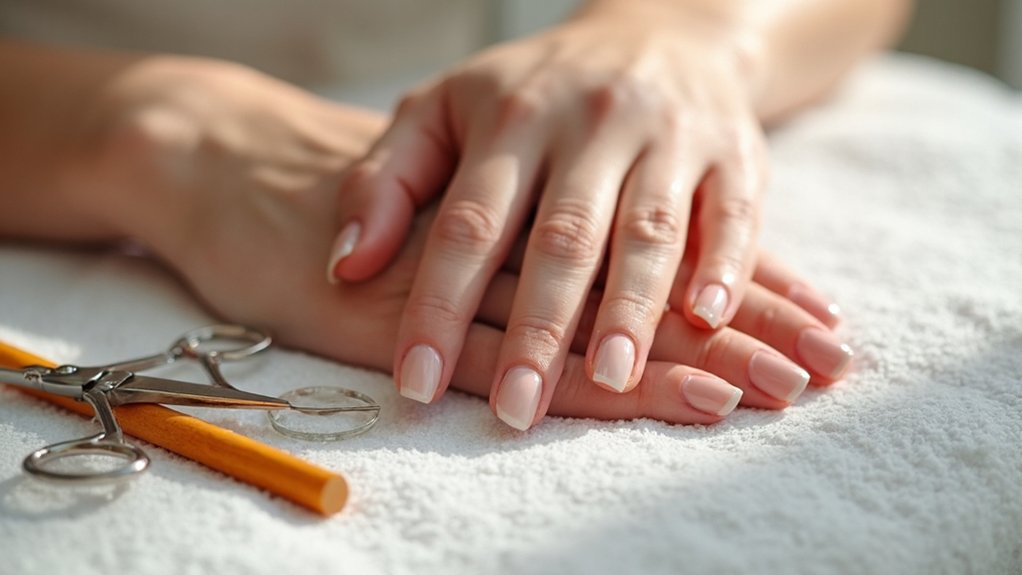
Cutting your cuticles safely is essential for maintaining healthy nails and preventing infections. You might think it’s a simple task, but there are specific techniques and tools that can make a significant difference. If you’re unsure how to go about it, you’re not alone. Many people make common mistakes that can lead to damage. Let’s explore the best practices to guarantee your cuticle care is both effective and safe.
How to cut cuticles safely without damage?
While it might seem tempting to trim your cuticles for a polished look, doing so safely requires a few careful steps.
Start by soaking your hands in warm, soapy water for a few minutes to soften the cuticles. Use a clean cuticle pusher to gently push back the cuticles instead of cutting them.
If you must trim, use sterilized cuticle scissors and snip only the excess skin. Avoid cutting too close to the nail bed to prevent injury.
Finally, moisturize your cuticles with oil or cream to keep them healthy. Following these steps helps you maintain a beautiful, safe manicure.
What are cuticles and why do we need to care for them?
Cuticles are the thin layers of skin at the base of your nails that serve as a protective barrier. They shield your nails from bacteria and infections while helping to keep moisture in.
When you neglect your cuticles, they can become dry, cracked, and painful, leading to potential infections or hangnails. Taking care of your cuticles not only enhances the appearance of your nails but also promotes their health.
What tools are essential for safe cuticle care?
Taking care of your cuticles is essential for maintaining healthy nails, but using the right tools makes all the difference.
Start with a high-quality cuticle nipper; this guarantees precise cuts without tearing. A gentle cuticle pusher helps push back your cuticles safely, while a nail file smooths any rough edges.
Don’t forget a soft-bristle brush to keep your nails clean. A moisturizing cuticle oil will nourish and hydrate your cuticles, promoting their health.
Finally, always have a pair of tweezers on hand for any stubborn hangnails. With these tools, you’ll keep your cuticles safe and your nails looking fantastic!
How to prepare your cuticles before cutting?
Before you start cutting your cuticles, it’s important to prepare them properly for the best results.
Begin by soaking your hands in warm, soapy water for about five minutes. This softens the cuticles, making them easier to manage.
After soaking, gently push back the cuticles using a cuticle pusher or a soft cloth.
Pat your hands dry, guaranteeing no moisture remains, as damp cuticles can lead to tearing.
Applying a cuticle oil can also help nourish and soften the area further.
Taking these steps will guarantee your cuticles are ready for a safe and effective trimming experience.
What techniques can you use for safely cutting cuticles?
Once your cuticles are properly prepared, you can move on to the actual cutting process.
Use sharp, sanitized cuticle nippers for precision. Hold the nippers at a 45-degree angle to avoid pulling or tearing. Gently press the nippers against the excess cuticle, and snip carefully, removing only the dead skin.
Avoid cutting live tissue, as this can lead to pain and infection. Work slowly, taking breaks if needed, to guarantee accuracy.
If you’re unsure, consider using a wooden cuticle stick to push back instead. This helps maintain a neat appearance while minimizing potential damage.
What are the common mistakes to avoid when cutting cuticles?
How can you guarantee a safe and effective cuticle cutting experience? Start by avoiding common mistakes.
First, don’t cut too much; trimming just the excess skin is essential. Over-trimming can lead to painful hangnails or infections.
Next, skip using dull tools; invest in quality, sharp cuticle nippers.
Also, don’t forget to sanitize your tools before use to prevent bacteria transfer.
Finally, avoid cutting cuticles when they’re dry; it’s better to soften them with a cuticle oil or cream first.
How to maintain healthy cuticles after cutting?
To maintain healthy cuticles after cutting, it’s crucial to nurture them with proper care.
Start by applying a moisturizing cuticle oil daily; this keeps your cuticles hydrated and prevents dryness. Gently massage the oil into your cuticles to stimulate blood flow and promote healing.
Avoid biting or picking at your cuticles, as this can lead to infections. Keep your nails trimmed and filed to prevent snagging.
Finally, incorporate a balanced diet rich in vitamins and minerals to support nail health.
Why is it important to seek professional help for cuticle care?
Why risk injury or infection when you can seek professional help for cuticle care?
Professionals have the training and tools to safely handle your cuticles, minimizing the chance of damage. They understand the anatomy of your nails and can identify any potential issues that you might overlook.
A skilled nail technician knows how to trim cuticles without causing pain or irritation, ensuring a clean and healthy look. Plus, regular visits can help maintain your cuticles in ideal condition, preventing dryness and hangnails.
Trusting a professional not only protects your nails but also enhances your overall nail care experience.