
A nail tech chair needs to fit the work, not just the room. A seat that feels comfortable at a manicure table may sit too high for pedicures, while a low stool can make table work awkward.
These 10 rolling chairs and stools cover saddle and conventional seats, backrests, and lower pedicure-friendly options. Use the guide below to narrow your choice by seat height, support, and how you move around your station.
Best 10 Ergonomic Nail Technician Chair Picks for 2026
Best for Back Support
Ergonomic Saddle Chair with Back Support
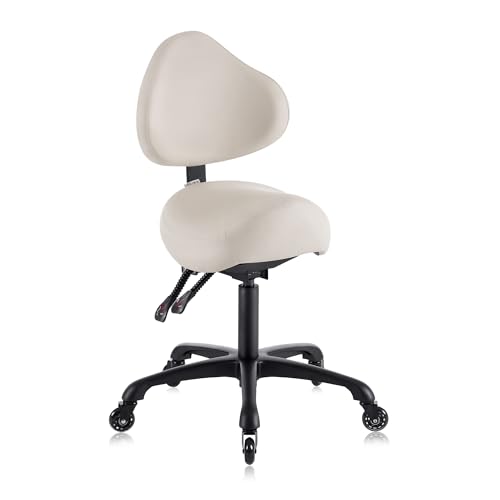
- Adjustable saddle-seat backrest
- 21–26-inch seat height
- 400-pound stated capacity
Best For: Technicians seeking back support and hard-floor mobility
Best with Foot Ring
Saddle Stool with Ring Footrest and Back

- Ring footrest and backrest
- 22–26-inch seat height
- Conflicting listed weight limits
Best For: Higher workstations where foot support matters
Best for Lower Tables
Yaheetech Rolling Nail Tech Chair

- Round padded seat and backrest
- 18.3–24-inch stated adjustment
- Conflicting seat-height detail
Best For: Lower manicure tables and buyers who prefer a round seat
Best Backless Saddle
KKTONER Pink Rolling Saddle Stool
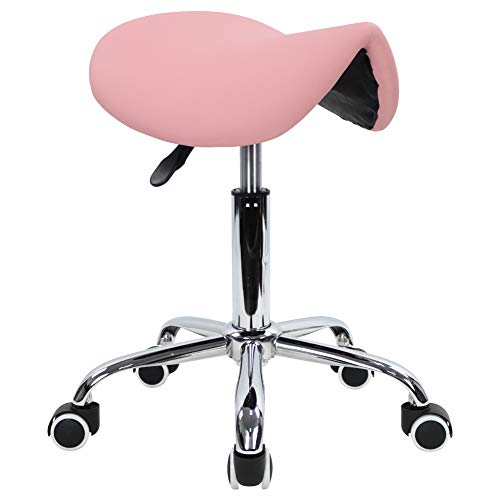
- Backless saddle-shaped seat
- 17.7–24-inch center height
- Five wheels for hard floors
Best For: Technicians wanting a lower, backless saddle stool
Mid-Height Pedicure Pick

- Cushioned PU seat and short backrest
- Five quiet-rolling wheels
- Conflicting seat-height specifications
Best For: Pedicure stations needing a compact, rolling stool
Low Pedicure Pick
Lessmore 15-Inch Rolling Stool

- 13.5-to-15.5-inch stated height range
- Memory-foam cushioning
- 220-pound listed capacity
Best For: Low pedicure and foot-care stations
Quick-Setup Pick
Antlu Saddle Stool With Backrest

- 21.5–28.5-inch adjustable seat height
- Backrest and 360-degree swivel
- 350-pound capacity; tool-free assembly
Best For: Techs seeking a quickly assembled, adjustable saddle stool
High-Capacity Pick
VEVOR Saddle Stool With Back Support

- 450-pound stated weight capacity
- 2.4-inch-thick foam cushion
- 21.7–28-inch adjustable seat height
Best For: Techs prioritizing capacity and a thicker saddle cushion
Adjustable-Backrest Pick

- Lockable, angle-adjustable backrest
- Three-inch PU rolling casters
- 440-pound stated capacity
Best For: Techs who want to fine-tune backrest angle
Best for Back Support – Ergonomic Saddle Chair with Back Support
If you want an ergonomic nail technician chair with a saddle seat and adjustable backrest, this model offers both, plus a height range of 21–26 inches. Its five-leg aluminum base supports up to 400 pounds.
Best For: Nail technicians who want a saddle seat with adjustable back support and easy movement on hard floors.
Pros:
- Adjustable backrest adds support during seated work.
- PU casters are designed to roll quietly on hard flooring.
- 360-degree swivel and pneumatic height adjustment help you move between your table and supplies.
Cons:
- The stated 21-inch minimum height may be too tall for some manicure tables.
- The casters are specifically described for hard floors.
Check your table height before choosing it: the backrest and sturdy base are appealing, but the seat starts higher than some salon stools.
Best with Foot Ring – Saddle Stool with Ring Footrest and Back
This ergonomic nail technician chair combines a saddle-style seat, backrest, and ring footrest for technicians working at taller surfaces. The hydraulic lift adjusts the seat from 22 to 26 inches, and the stool swivels 360 degrees.
Best For: Technicians with a higher workstation who want a place to rest their feet.
Pros:
- Ring footrest provides a foot-support option at taller tables.
- Adjustable height and swivel help with workstation access.
- Five casters are described as suitable for hardwood, tile, or carpet.
Cons:
- A 22-inch minimum seat height may not suit low manicure tables.
- The supplied notes conflict on capacity: the bullets say 350 pounds, while the details specify 250 pounds.
The foot ring is the reason to consider this stool, particularly if your feet would otherwise dangle. Confirm the weight rating before purchase because the supplied figures do not agree.
Best for Lower Tables – Yaheetech Rolling Nail Tech Chair
For a conventional round-seat ergonomic nail technician chair, this Yaheetech stool pairs a foam-padded seat with a padded backrest. Its stated adjustment range is 18.3–24 inches, offering a lower starting height than the saddle chairs above.
Best For: Technicians using a lower manicure table who prefer a round seat and backrest.
Pros:
- 18.3–24-inch stated height range accommodates a variety of seated workstations.
- Five casters and a swiveling seat make it easier to reach nearby supplies.
- PU-leather-covered foam pads the seat and backrest.
Cons:
- Its round seat does not provide the saddle shape some buyers want.
- The supplied details also list a conflicting 27.5-inch seat height, so confirm the adjustment range before ordering.
This is a straightforward salon-stool choice if a lower seat matters more to you than saddle styling. Measure your preferred working height against the stated range.
Best Backless Saddle – KKTONER Pink Rolling Saddle Stool
If you prefer a backless ergonomic nail technician chair, this pink KKTONER stool offers a saddle-shaped seat, five wheels, and a 360-degree swivel. Its listed center seat-height range is 17.7–24 inches.
Best For: Technicians who want a backless saddle stool that can sit relatively low.
Pros:
- Saddle shape offers an alternative to a round salon seat.
- Five wheels are described for easy rolling on hard floors.
- PU-leather cushion is described as waterproof and easy to wipe clean.
Cons:
- No backrest for technicians who want back support.
- The saddle slopes, so the listed height differs at the front, center, and back.
Its center height starts low for a saddle stool, but use the front, center, and back measurements when checking fit: they range from 19.5–25.8, 17.7–24, and 18.3–24.6 inches respectively.
Mid-Height Pedicure Pick – Paddie Hydraulic Salon Stool
The Paddie is an ergonomic nail technician chair for pedicure work that calls for a cushioned seat, a short backrest, and easy movement around the client. Its PU leather upholstery wipes clean with a damp cloth.
Best For: Nail techs seeking a mid-height rolling stool with compact back support.
Pros:
- Pneumatic height adjustment is listed at 23.2 to 25.6 inches.
- Aluminum base and five quiet-rolling wheels; rated for up to 300 pounds.
- High-density foam cushioning and a water- and oil-resistant PU surface.
Cons:
- The short backrest offers less coverage than a full-height chair back.
- The supplied specifications also list a 17.7-inch seat height, conflicting with the stated adjustment range; confirm the working height before ordering.
Its practical appeal is the combination of wipe-clean cushioning and maneuverability, provided the confirmed seat height fits your pedicure setup.
Adjustable Saddle Pick – Antlu Saddle Stool with Back
For techs who prefer a saddle seat, this ergonomic nail technician chair pairs rolling mobility with an adjustable backrest. The stated 21-to-28-inch height range offers more positioning flexibility than a fixed-height stool.
Best For: Nail techs who want a saddle seat and adjustable back support at a higher workstation.
Pros:
- Backrest adjusts from 80 to 110 degrees and can lock in place or swing freely.
- Seat height adjusts from 21 to 28 inches.
- Swiveling seat and wheels make it easier to reposition.
Cons:
- The 21-inch minimum height may be too tall for low pedicure stations.
- The notes give conflicting weight figures: 400 pounds in the bullets and 374.8 pounds in the specifications.
Choose this model for its adjustable sitting position, but check both your station height and the confirmed load rating before purchase.
Low Pedicure Pick – Lessmore 15-Inch Rolling Stool
The Lessmore is an ergonomic nail technician chair aimed at low pedicure workstations. Its stated 13.5-to-15.5-inch height range, memory-foam cushioning, and compact backrest distinguish it from taller salon stools.
Best For: Nail techs working at low foot-care stations who want a rolling stool with back support.
Pros:
- Low pneumatic height adjustment from 13.5 to 15.5 inches.
- Memory-foam seat and backrest with waterproof, easy-clean PU upholstery.
- Swivel casters have quiet polyurethane tires; listed capacity is 220 pounds.
Cons:
- The low height range is not suited to taller workstations.
- The compact backrest will not provide full-back coverage.
This is the most clearly low-sitting option of the three, so measure your working height before choosing it over a taller stool.
Quick-Setup Pick – Antlu Saddle Stool With Backrest
The Antlu is an ergonomic nail technician chair for workstations that need a rolling saddle seat with back support. Its seat adjusts from approximately 21.5 to 28.5 inches high, giving you room to match different table heights.
Best For: Nail techs who want an adjustable saddle stool that is quick to assemble.
Pros:
- Backrest is positioned close to the spine for upright support.
- Seat swivels 360 degrees and supports up to 350 pounds.
- Tool-free assembly is estimated at five minutes.
Cons:
- The saddle-shaped seat may not suit shoppers who prefer a flat seat.
- At approximately 21.5 inches, the minimum seat height may be too tall for some desks.
This is a practical option if easy setup and a broad height range matter most. Check your table height before buying to make sure the stool can sit low enough for your work.
High-Capacity Pick – VEVOR Saddle Stool With Back Support
The VEVOR is an ergonomic nail technician chair worth considering when a higher weight capacity is a priority. It pairs a saddle seat and back support with a 21.7-to-28-inch seat-height range and a widened metal base.
Best For: Nail techs seeking a 450-pound-rated rolling stool with a cushioned saddle seat.
Pros:
- Rated to support up to 450 pounds.
- Seat has a 2.4-inch-thick foam cushion and an easy-to-clean PU leather surface.
- Five PU casters are designed for quiet rolling on carpet, tile, and hardwood.
Cons:
- The 21.7-inch minimum seat height may not work with lower tables.
- Its 21.3-inch-wide base needs room to roll around the workstation.
Choose this model for its stated capacity and thicker cushion, but measure both your table height and available floor space before committing.
Adjustable-Backrest Pick – Black Ergonomic Saddle Chair
This ergonomic nail technician chair stands out for its lockable, angle-adjustable backrest. It also has lever-operated height adjustment, a 360-degree swivel, and large PU casters for moving between tasks.
Best For: Nail techs who want to adjust their backrest angle and roll around the workstation.
Pros:
- Backrest angle can be adjusted and locked in place.
- Three-inch PU casters are designed for quiet movement and floor protection.
- Rated for up to 440 pounds and assembled without tools.
Cons:
- The supplied notes do not specify the adjustable seat-height range.
- The listed seat and overall dimensions are inconsistent, making fit harder to judge from the specifications alone.
The adjustable backrest is the clearest reason to choose this model. Confirm its seat-height range and dimensions with the seller if your table fit is tight.
How We Picked the Best Ergonomic Nail Technician Chair
We focused on chairs and stools marketed for nail, salon, spa, or similar seated work. The selection covers saddle and conventional seats, options with back support, and lower stools intended for pedicures. That range matters because no single seat height or shape works equally well at a manicure table and beside a pedicure chair.
Product names and feature claims are a starting point, not proof of long-term comfort. Before ordering, confirm the current seat-height range, dimensions, weight rating, and return terms on the listing.
Quick Comparison: Match the Chair to the Task
Mostly manicures: Start with an adjustable rolling stool that lets you sit close to the table without raising your shoulders. A backrest may help during pauses, but check that it does not keep you from reaching your work.
Mostly pedicures: Look first at low pedicure stools, including the Paddie and Lessmore options. Their minimum seat height matters more than maximum lift if you work near foot level.
Frequent movement between stations: Consider a saddle stool with smooth-rolling casters and a height range that suits each station. Saddle seats can encourage a more open hip angle, but their shape is a matter of preference.
Key Buying Factors for an Ergonomic Nail Technician Chair
Seat Height and Work Surface
Measure your table and the height of the client’s hands or feet while you work. Your chair should let you keep your feet supported and your shoulders relaxed, rather than reaching upward or leaning forward. Compare both the minimum and maximum seat heights; “adjustable” alone tells you little.
Seat Shape and Back Support
A saddle seat positions your legs differently from a flat stool and may feel more natural when you lean toward a client. Try one if possible: a shape that suits one technician may create pressure for another. Backrests vary in placement and adjustability, so check whether the support meets your lower back in your usual working position.
Mobility, Stability, and Cleaning
Check caster compatibility with your flooring and whether the chair rolls when you want it to, but stays manageable during detail work. Look at the base footprint and stated weight capacity, especially for shared salon seating. Wipe-clean upholstery is practical around polish dust and routine spills; follow the manufacturer’s cleaning instructions for its material.
Who Should Buy Which Ergonomic Nail Technician Chair?
Choose a low pedicure stool if foot services dominate your schedule. Choose a height-adjustable conventional stool if you prefer a familiar flat seat for table work. Consider a saddle stool with a backrest if you regularly change position and like that seating style. For a shared station, prioritize a broad usable height range, a suitable weight rating, and an easy-to-clean surface over color or styling. The best Ergonomic Nail Technician Chair is the one that fits your workstation and lets you work without routinely hunching, reaching, or balancing on your toes.