

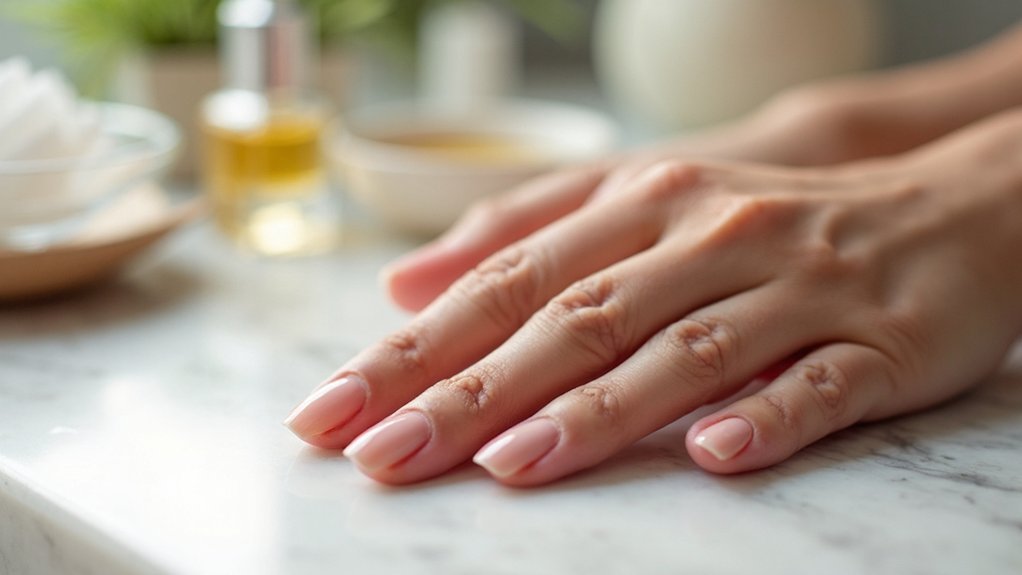
You might think that cutting your cuticles helps your nails grow healthier or that nail polish suffocates them. These beliefs are just a couple of the common myths surrounding nail care. Misunderstandings like these can lead to unnecessary damage. So, what’s the truth behind these myths? And how can you guarantee your nails stay healthy? Let’s explore the facts that can help you make better choices for your nail care routine.
What are the Most Common Nail Care Myths Debunked?
Have you ever wondered which nail care myths are just that—myths? One common belief is that cutting your cuticles promotes healthier nails, but this can actually lead to infections.
Another myth suggests that using nail polish regularly weakens your nails, while the truth is that proper care can keep them strong. Some think that nail strengtheners work miracles overnight, but real results take time and consistent use.
Ultimately, many believe that nails need to breathe; however, they’re made of keratin, so they don’t require air. Understanding these myths helps you take better care of your nails and avoid unnecessary damage.
Why Do Nail Care Myths Persist?
Nail care myths persist for several reasons, often fueled by misinformation and a lack of understanding. You might hear a friend’s anecdote or see a viral post, and before you know it, that myth spreads like wildfire.
Additionally, the beauty industry can promote half-truths to sell products, leading to confusion. Many people don’t seek out expert advice, relying instead on personal experiences or outdated practices.
This cycle of hearsay and marketing creates a perfect storm for nail care myths to thrive, making it essential for you to seek reliable sources and educate yourself about proper nail care techniques.
What Common Nail Care Myths Should You Stop Believing?
While many people believe they’re doing the right thing for their nails, several common myths can actually do more harm than good.
It’s time to debunk these ideas and take better care of your nails.
- Cutting your cuticles prevents infection
- Nail polish can suffocate your nails
- Weak nails are always a sign of poor health
- Frequent manicures weaken your nails
- Using acrylics permanently damages your natural nails
How Can You Tell Which Nail Care Advice is Reliable?
How can you discern which nail care advice is actually trustworthy? Start by checking the source. Reliable information often comes from licensed professionals like dermatologists or certified nail technicians.
Look for peer-reviewed studies or reputable beauty publications that back the claims. Be wary of advice that seems too good to be true or lacks scientific evidence. Personal anecdotes can be misleading, so focus on expert opinions instead.
Finally, pay attention to consensus among professionals; if multiple experts agree, you’re likely on the right track. Trust your instincts, and don’t hesitate to ask questions if something feels off.
Are Brittle Nails Always a Sign of Poor Care?
Brittle nails can be frustrating, but they aren’t always a sign of poor care. Various factors contribute to brittleness that you mightn’t consider, such as:
- Harsh weather conditions, leaving nails dry and fragile
- Nutritional deficiencies, particularly lacking biotin or zinc
- Frequent exposure to water, weakening nail structure
- Underlying health issues, like thyroid disorders or anemia
- Overuse of nail products, like polish removers or acrylics
Understanding these causes can help you identify the true issue behind your brittle nails and lead you on the path to healthier nails without jumping to conclusions about your care routine.
What Are the Best Practices for Healthy Nails?
Healthy nails require a combination of proper care and mindful habits. Start by keeping your nails clean and dry to prevent infections. Trim them regularly to avoid breaks and snagging.
Use a gentle nail file to shape your nails and avoid excessive filing, which can weaken them. Moisturize your cuticles and nails with a good-quality oil or cream to maintain hydration.
Protect your nails by wearing gloves when doing chores, especially when using harsh chemicals. Finally, resist the urge to bite your nails or pick at your cuticles, as these habits can lead to damage and infection.
How Do Diet and Nutrition Impact Nail Health?
Nail care goes beyond just external practices; what you eat plays a significant role in the health of your nails. A balanced diet rich in essential nutrients can strengthen your nails and prevent brittleness.
Consider incorporating these foods into your meals:
- Leafy greens for vitamins A and C
- Nuts and seeds for healthy fats and protein
- Eggs for biotin and keratin
- Fish for omega-3 fatty acids
- Legumes for zinc and iron
Why Is Professional Nail Care Important for Debunking Myths?
Although many people rely on DIY solutions for their nail care, consulting a professional can help debunk common myths that might cause more harm than good.
Professionals possess the expertise to identify the right treatments and products tailored to your specific needs. They can clarify misconceptions about nail health, such as the belief that all nail products are the same or that frequent manicures are harmful.