

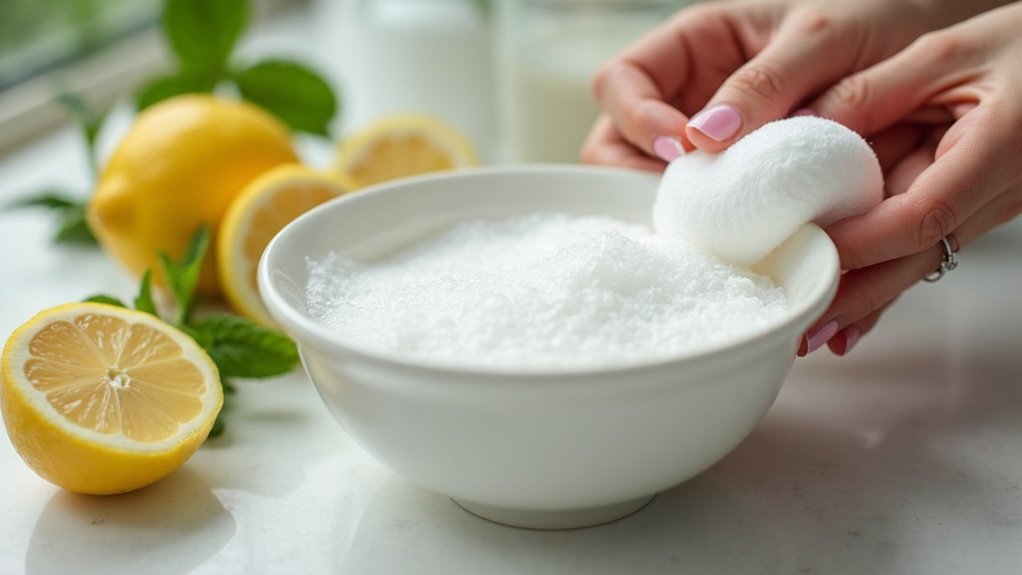
If you’ve noticed your nails looking dull or stained, you’re not alone. Many factors can cause discoloration, but fortunately, there are safe methods to brighten them at home. By using natural remedies and simple household items, you can restore your nails’ appearance without harsh chemicals. Curious about how to effectively use these methods? Let’s explore the causes of nail discoloration and the best techniques for achieving those brighter, healthier-looking nails.
How to whiten nails safely at home?
If you’ve noticed your nails looking dull or stained, don’t worry; you can whiten them safely at home using simple methods.
Start by soaking your nails in a mixture of warm water and lemon juice for about 10 minutes. The acidity of lemon helps lift stains.
You can also create a paste using baking soda and water, applying it to your nails for a few minutes before rinsing off.
Additionally, try using hydrogen peroxide diluted with water for a quick soak.
Regularly moisturizing your cuticles and nails with oil can prevent future discoloration, keeping them healthy and bright.
What causes nail discoloration?
Nail discoloration can stem from various factors, and understanding these causes helps in maintaining their health and appearance.
Frequent use of nail polish, especially darker shades, may lead to yellowing or staining. Additionally, certain medical conditions, like fungal infections or psoriasis, can cause changes in color.
Your diet also plays a role; deficiencies in vitamins and minerals can result in dull or discolored nails. Exposure to harsh chemicals and excessive moisture can weaken nails, making discoloration more likely.
Ultimately, smoking can contribute to yellowing, affecting your nails’ overall look. Being aware of these factors can help you prevent discoloration.
Are there natural remedies for whitening nails?
While many people seek quick solutions for brightening their nails, natural remedies can offer effective and gentle alternatives.
One popular option is lemon juice, known for its natural bleaching properties. Simply soak your nails in a mixture of lemon juice and water for about ten minutes.
Another remedy involves using baking soda mixed with water to create a paste; gently scrub this onto your nails, then rinse.
You can also try olive oil, which nourishes while enhancing brightness.
How to use baking soda to whiten nails?
To brighten your nails effectively, using baking soda is a simple and powerful method.
Start by mixing two tablespoons of baking soda with enough water to form a thick paste. Apply the paste directly to your nails, focusing on any stained areas.
Gently scrub with an old toothbrush or your fingers for about five minutes. Rinse your nails thoroughly with warm water and pat them dry.
For best results, repeat this process once a week. Baking soda not only whitens your nails but also helps remove dirt and debris, leaving them looking clean and fresh.
Enjoy your brighter nails!
What is the role of lemon juice in nail whitening?
Lemon juice plays an essential role in whitening your nails thanks to its natural bleaching properties. Its high citric acid content helps break down stains and discoloration caused by nail polish, food, or everyday wear.
When you apply lemon juice directly to your nails, it effectively lightens their appearance over time. You can enhance its effects by soaking your nails in a mixture of lemon juice and water for about 10 minutes.
Plus, lemon juice has antibacterial properties, which can help maintain nail health while you work on achieving that brighter look. Just remember to moisturize afterward!
How to maintain healthy and white nails?
Achieving white nails is just one part of the equation; maintaining their health is equally important.
To keep your nails healthy, hydrate them regularly with cuticle oil or moisturizer. Make sure you’re eating a balanced diet rich in vitamins and minerals, particularly biotin and zinc.
Trim your nails regularly to prevent breakage and keep them looking neat. Avoid harsh chemicals found in some polishes and removers, opting for gentle, non-toxic alternatives instead.
Finally, protect your nails from excessive moisture and physical damage by wearing gloves during chores.
With these steps, you’ll enjoy both white and healthy nails!
What to avoid when trying to whiten nails?
While you might be enthusiastic to whiten your nails, there are several pitfalls you should steer clear of to avoid damaging them.
First, don’t use harsh chemicals like bleach, as they can weaken your nails and cause irritation.
Avoid excessive filing or buffing, which can thin the nail and lead to breakage.
Steer clear of soaking your nails in vinegar or lemon juice for too long, as this can dry them out.
Finally, don’t forget to skip dark nail polishes, as they can stain your nails, counteracting your whitening efforts.
Treat your nails gently to keep them healthy and bright!
Why is professional treatment sometimes necessary?
Sometimes, you might find that home remedies just aren’t enough to achieve the nail whitening results you desire.
If your nails show signs of discoloration due to underlying health issues, like fungal infections or other medical conditions, professional treatment becomes necessary. A dermatologist can accurately diagnose the problem and provide targeted treatments that home methods can’t offer.
Additionally, professionals use stronger, safer products that may be more effective. If you’re dealing with persistent stains or damage, don’t hesitate to seek expert help.
Your nails deserve the best care, and sometimes that means turning to a professional.