

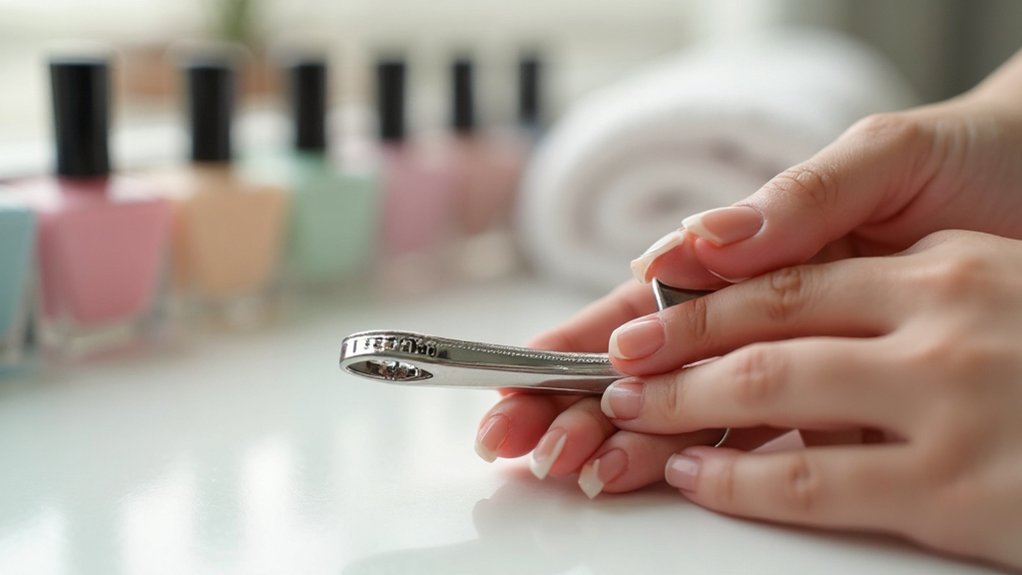
When it comes to trimming your nails, there’s more to it than just snipping away. If you want to avoid damage and maintain their health, you’ll need to adopt the right techniques and tools. It’s essential to know how often to trim and what mistakes could lead to issues down the line. Let’s explore the best practices for safe nail trimming and how to keep your nails looking their best.
How to trim nails without damaging them: What are the best techniques?
When it comes to trimming your nails, how can you guarantee you do it without causing damage? First, make sure your nails are clean and dry; this helps prevent splitting.
Use gentle, steady pressure when you trim, cutting straight across to avoid ingrown nails. If you prefer a curved shape, gently round the edges. Don’t trim too close to the skin, as this can lead to pain and infection.
After trimming, smooth any rough edges with a buffer. Finally, moisturize your nails and cuticles to keep them healthy and hydrated, ensuring they stay strong and less prone to damage.
What tools do you need for safe nail trimming?
To trim your nails safely, you’ll need a few essential tools that guarantee a clean and damage-free result.
Start with a high-quality nail clipper, preferably one designed for your nail type. A nail file is also vital for smoothing edges and preventing snagging.
Don’t forget a cuticle pusher to maintain healthy cuticles, and a pair of scissors if you prefer trimming with them.
Finally, keep a disinfectant handy to clean your tools after use.
With these tools, you’ll be set for a safe and effective nail-trimming experience, ensuring your nails stay healthy and looking great.
How often should you trim your nails for optimal health?
Regular nail trimming is key to maintaining ideal nail health. You should aim to trim your nails every two to three weeks, depending on how quickly they grow.
If you’re active or use your hands frequently, you might need to trim them more often. Shorter nails are less prone to breakage and infections, so keeping them neat and tidy is fundamental.
Pay attention to their growth rate and adjust your schedule accordingly. Remember, consistency is vital—don’t wait until they’re too long or unruly.
Regular trims help you avoid discomfort and keep your nails looking their best.
What are common mistakes to avoid when trimming nails?
What mistakes should you steer clear of while trimming your nails?
First, avoid using dull clippers; they can cause jagged edges and split nails.
Don’t cut your nails too short; this can lead to painful ingrown nails.
Skip trimming your cuticles, as this protects your nail beds.
Make certain you trim in a straight line, not in a rounded shape, to maintain nail strength.
Finally, don’t rush the process; take your time to guarantee you do it right.
Why is nail care important for overall hygiene?
While you mightn’t think about it often, nail care plays an essential role in maintaining overall hygiene. Clean, well-groomed nails help prevent the buildup of dirt, bacteria, and fungi, which can lead to infections and other health issues.
When you neglect your nails, you’re more likely to transfer germs to your mouth or eyes, risking illnesses. Regular trimming and cleaning also help you avoid hangnails and painful nail conditions.
Plus, healthy nails can boost your confidence and make a positive impression on others. Prioritizing nail care is a simple yet effective way to enhance your overall well-being.
How to recognize the signs of nail damage?
Have you ever wondered if your nails might be damaged? Look for signs like discoloration, which can indicate fungal infections or other issues.
If your nails are brittle, splitting, or peeling, it’s a clear sign of damage. Swelling or redness around the nail bed might suggest an infection or irritation.
Additionally, if your nails feel painful or tender, don’t ignore it. Pay attention to changes in shape or texture, as these can signal underlying health problems.
Regularly checking your nails can help you catch issues early, ensuring you maintain their health and appearance.
What are alternative methods for nail maintenance?
Ever wondered how to keep your nails healthy without traditional trimming?
There are several alternative methods that can help maintain your nails effectively.
Here are four options to evaluate:
- File Regularly: Use a fine-grit file to smooth edges and prevent snags.
- Moisturize: Apply cuticle oil or hand cream to keep nails hydrated.
- Buff: Gently buff your nails to enhance shine and reduce roughness.
- Protect: Wear gloves when doing chores to avoid damage from harsh substances.
These methods can help you maintain your nails while keeping them strong and healthy.
How to maintain healthy nails post-trimming?
To keep your nails healthy after trimming, focus on hydration and protection.
Apply a nourishing cuticle oil or hand cream daily to maintain moisture. This helps prevent cracking and peeling.
Additionally, consider wearing gloves during household chores to shield your nails from harsh chemicals and excessive water exposure.
Regularly file your nails to avoid sharp edges, which can lead to snags.
Finally, maintain a balanced diet rich in vitamins and minerals, particularly biotin, to support nail strength.
With these simple steps, you’ll guarantee your nails stay healthy, strong, and beautiful long after your trimming session.